
RESEARCH
Occupational Health
Occupational Health
Occupational Heat Stress
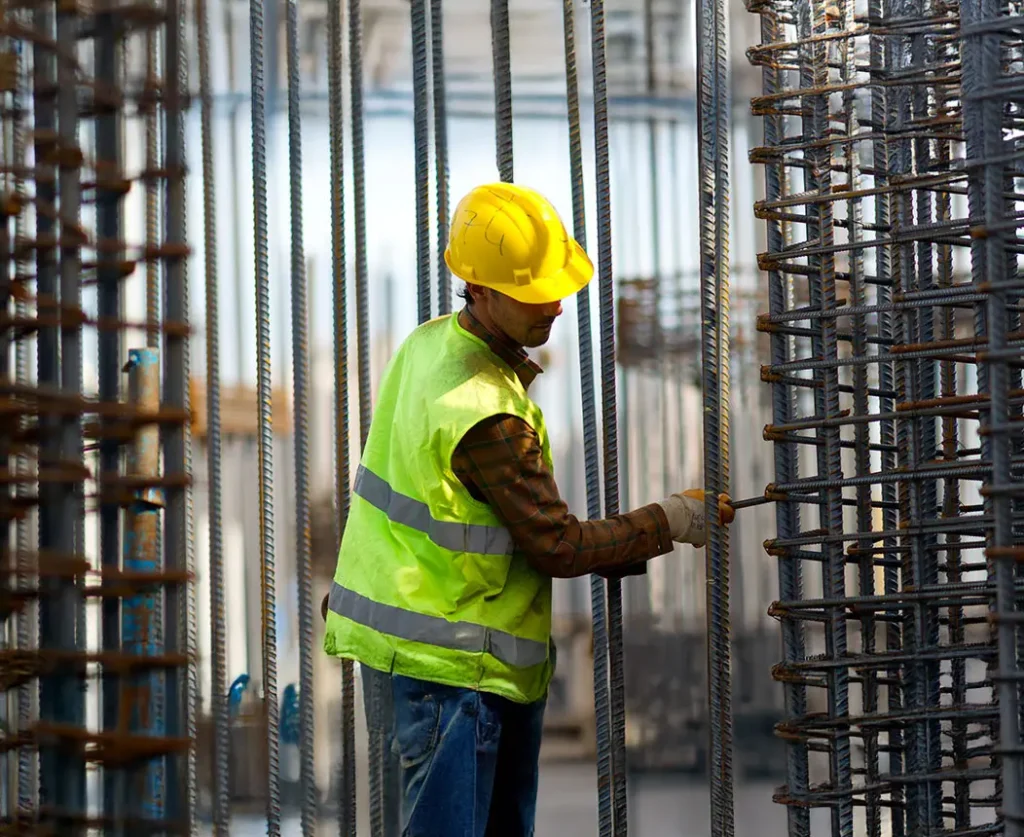
We have conducted field studies in different parts of the world showing that manual labour sites are often characterized by high heat and humidity as well as heat stress in the workplace, and that these can reduce manual labour workers productivity by as much as 15%. This is because environmental and metabolic heat gain lead to increased skin temperature which augments thermal perception and cardiovascular strain. In turn, this leads to increased perceived exertion which, eventually, causes reductions in work rate (i.e., self-pacing). We address the negative impacts of workplace heat stress on the health and productivity of manual labour workers by undertaking in-situ analyses and developing adaptation strategies for major industries such as manufacturing, construction, transportation, tourism, and agriculture.
Occupational Health
Guidelines for the Assessment of Heat Strain
The bioclimatic index recommended for the evaluation of heat strain is the Wet-Bulb Globe Temperature (WBGT).
The WBGT was invented by the Greek engineer-researcher Constantin Prodromos Yaglou and the American physiologist David Minard on behalf of the US Army in 19571. Since then, thousands of studies have been conducted that confirm the connection between the WBGT and the heat strain a person experiences. Recent studies by our Laboratory on hundreds of workers in various industries and countries around the world have shown that the WBGT is the most valid bioclimatic index for assessing the heat strain experienced by a person during work.2,3,4
Detailed information about the WBGT index and its measurement can be found in the following Practical Guide.
What the WBGT Measures
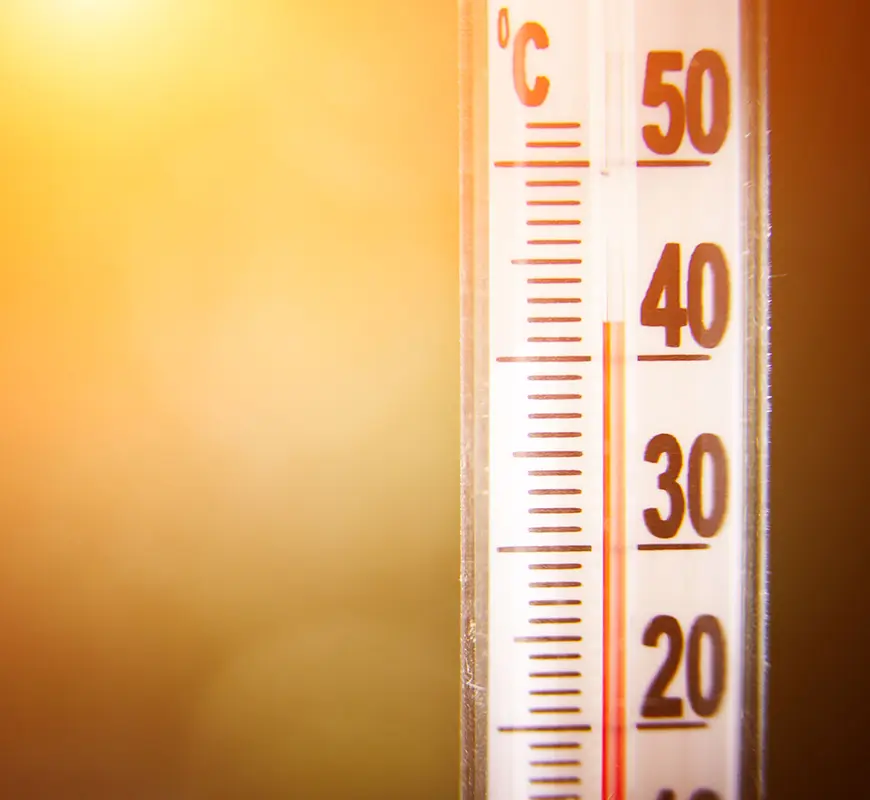
As defined by the international standard ISO 7243:2017, the WBGT (unit of measurement: °C) is calculated from three parameters:
1
The natural wet-bulb temperature, which is assessed using a wetted thermometer exposed to thermal radiation and wind. It captures the cooling effect of evaporation, which depends on humidity and air movement. This is the most heavily weighted element in the WBGT calculation because sweating is the body’s primary defense against heat.
2
The globe temperature, which is assessed inside a black globe and captures the radiant heat from the sun.
3
The air temperature, which is assessed using a standard thermometer in the shade.
For a practical and quick assessment of the WBGT index in the context of protecting workers from heat strain, we recommend the “WBGT App” for accurately monitoring heat strain conditions in any location. The application provides a WBGT estimation for outdoor areas and can be installed for free on Android and iOS mobile devices from the Google Play Store and the Apple App Store by searching for the name “WBGT App”. The app allows you to estimate the WBGT for the current time, as well as forecast the WBGT for the upcoming days, using data provided by the weather station closest to you.


In cases where you wish to measure the WBGT in a specific area but you are only able to take measurements of air temperature and relative humidity, the simplified WBGT equation can be used.
The simplified WBGT can be calculated automatically from the air temperature and relative humidity using the calculator below:
a. Temperature (°C)
b. Humidity (%)
c. indoors or outdoors in the shade
d. outdoors in the sun
Simplified WBGT
— °C
Occupational Health
WBGT in the Workplace
Heat strain in the workplace is one of the most underestimated risks in the modern work environment. As temperatures rise, the number of workers exposed to dangerous heat is rapidly increasing—and along with it, the burden of heat-related illnesses, kidney damage, reduced productivity, and increased mortality.
The WBGT forms the basis of ISO 7243, the international standard for assessing heat strain, and underpins the exposure limits issued by the International Labour Organization, the World Health Organization, and most national health and safety authorities. Employers use the WBGT to:
- Determine safe work-rest cycles based on workload intensity (light, moderate, heavy, very heavy).
- Trigger mandatory hydration breaks and access to shade or air-conditioned rest areas.
- Adjust acclimatization protocols for new or returning workers, who have reduced heat tolerance during the first 7-14 days of exposure.
- Decide when to reschedule work to cooler hours or postpone it entirely.
- Select appropriate personal protective equipment and cooling garments.
The research conducted by FAME Lab, including projects funded by the European Union and other international bodies, has directly informed occupational guidelines, training materials, and policy recommendations for the protection of workers exposed to heat.

Occupational Health
WBGT in Sports Settings
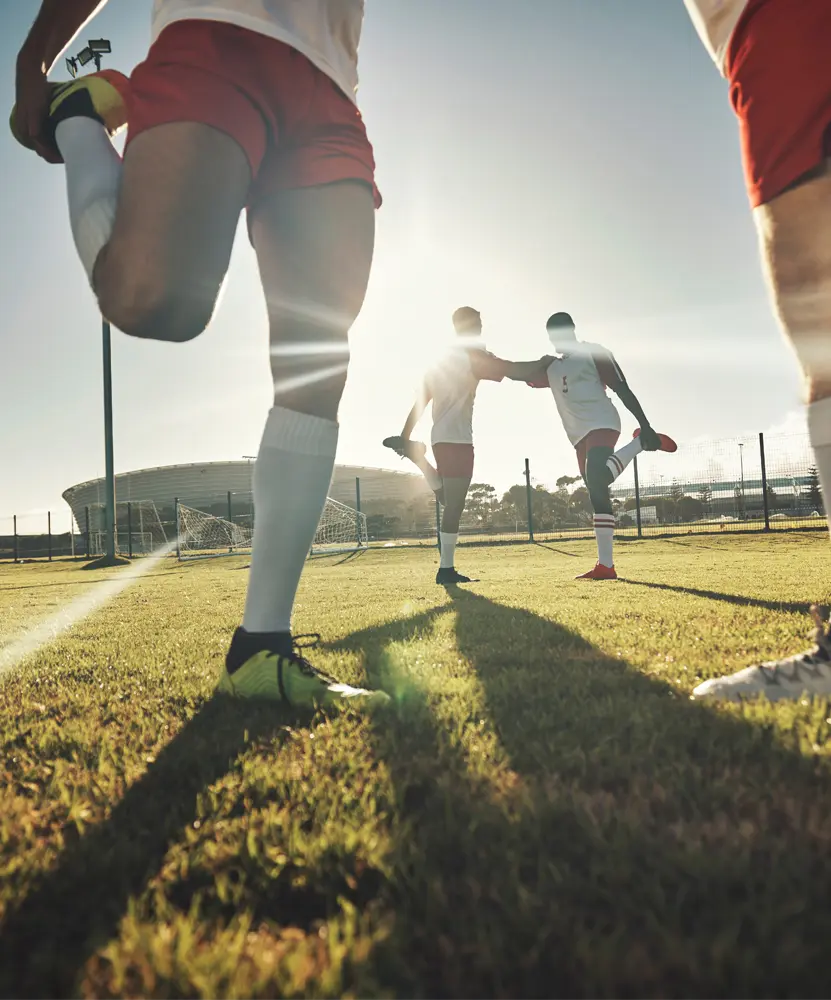
For athletes, the difference between safe and dangerous training conditions can be measured in degrees WBGT. Exertional heat illness is one of the leading causes of sudden collapse in sports, particularly in endurance running, soccer, rugby, American football, cycling, and military-style athletic events.
The WBGT is the index of choice for sports medicine and is used internationally to:
- Modify or cancel training sessions and competitions under conditions of high heat risk (such as implementing “cooling breaks” during matches).
- Adjust the intensity, duration, and exercise-to-recovery ratios for training sessions and matches.
- Schedule hydration and cooling breaks during events.
- Plan heat acclimatization for athletes traveling to hotter locations, including major international tournaments.
- Make return-to-play decisions following a heat-related episode.
Major organizations, including World Athletics, FIFA, the NCAA, and the US National Athletic Trainers’ Association, issue activity modification guidelines based on the WBGT. FAME Lab supports athletes, teams, and federations with expertise in environmental physiology, on-site assessments, and field testing in extreme environments.
References:
[1] Yaglou CP, Minard D. Control of heat casualties at military training centers. AMA Arch Ind Health. 1957; 16(4):302-316.
[2] Ioannou LG et al. (2022). Indicators to assess physiological heat strain – Part 1: Systematic review. Temperature (Austin); 9(3): 227-262.
[3] Ioannou LG et al. (2022). Indicators to assess physiological heat strain – Part 2: Delphi exercise. Temperature (Austin); 9(3): 263-273.
[4] Ioannou LG et al. (2022). Indicators to assess physiological heat strain – Part 3: Multi-country field evaluation and consensus recommendations. Temperature (Austin); 9(3): 274-291.